Enterprise Campus
One switching fabric across every building, managed from one place, with no closet left behind.
What the network looked like before we touched it.
A campus that grew building by building ends up with five vendors, four management consoles, and IDF closets nobody fully trusts. VLANs drift, PoE budgets are guesswork, and a single misconfigured uplink can take a wing offline during business hours. The team spends more time reconciling configs than improving the network.
Built to spec, once.
OKTET standardizes the access layer on the OS-2400 — 24-port multi-gig PoE++ with 90W per port — and aggregates each building on the OS-4800 over OF-SFP10 10GbE optics. A single L3 core on the OR-8000 carries inter-VLAN routing and the campus default route, so every closet runs the same firmware, the same config template, and reports to one management view. PoE budgets are measured, not estimated.
Compare the hardware →access-layer uptime across 11 buildings
PoE++ per port for cameras, APs and displays
firmware baseline replacing 5 vendor consoles
How the deployment actually went.
A regional college campus ran 11 buildings on whatever switching had been cheapest the year each one was wired. By the time they came to OKTET they were maintaining four management platforms, three firmware trains, and a spreadsheet that claimed to track which closet powered which access point. It did not. A planned AP refresh stalled because nobody could confirm the PoE headroom in the older IDFs without physically walking them.
We did not rip and replace. We standardized the access layer first: every IDF closet now terminates on OS-2400 switches, 24 ports of multi-gig PoE++ delivering a measured 90W where cameras and outdoor APs need it, and a documented per-switch power budget that the switch itself reports. Each building aggregates to a pair of OS-4800 distribution switches over OF-SFP10 10GbE links, and both buildings’ distribution layers home-run to a single OR-8000 acting as the L3 campus core. Inter-VLAN routing, the default route, and inter-building transit all live in one place, on one config template, on one firmware baseline.
The result the facilities team actually cares about: the access layer has held 99.99% uptime since cutover, measured per-closet, and the AP refresh finished in a single maintenance window because the power numbers were real. One firmware baseline replaced five vendor consoles. When a closet does need attention, the on-call engineer is looking at the same interface they saw in the last closet, which is the whole point.
None of this is exotic. It is a switching fabric built to spec, documented at install, and uniform enough that the network stops being a collection of historical accidents and starts being a system someone can reason about.
The line that built it.
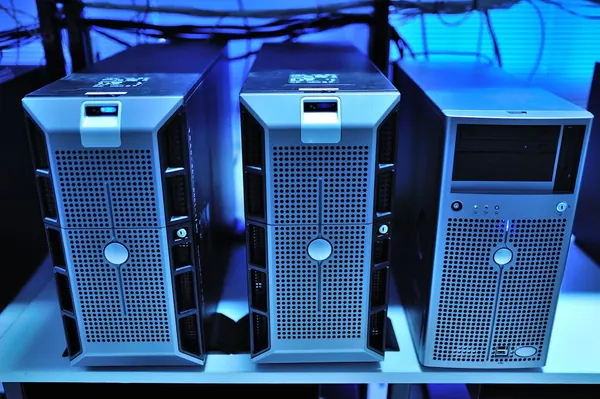
OKTET OS-2400
Twenty-four ports of line-rate 10GbE, four 25G uplinks, no oversubscription.
- Ports
- 24× SFP+ 10GbE · 4× SFP28 25GbE
- Switching capacity
- 680 Gbps / 506 Mpps

OKTET OS-4800
Forty-eight 10GbE ports and six 100G uplinks for the aggregation layer.
- Ports
- 48× SFP+ 10GbE · 6× QSFP28 100GbE
- Switching capacity
- 2.16 Tbps / 1,607 Mpps
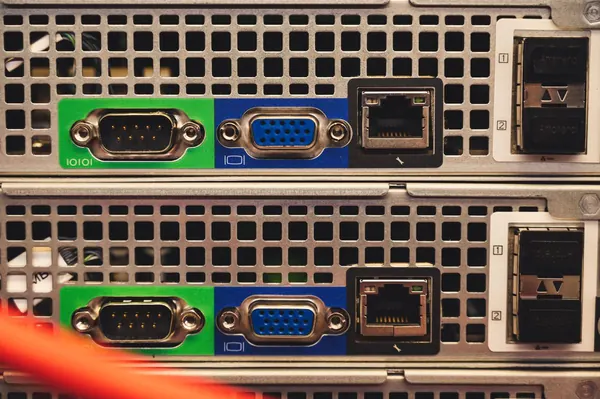
OKTET OR-8000
Enterprise edge routing and stateful firewall at 40 Gbps, line-rate where it counts.
- Throughput
- 40 Gbps firewall · 28 Gbps IPsec VPN
- Ports
- 8× SFP+ 10GbE · 2× RJ45 2.5GbE
Specify it for your site.
Send us the constraints — rack count, building count, subscriber load — and we'll return a bill of materials sized to spec.