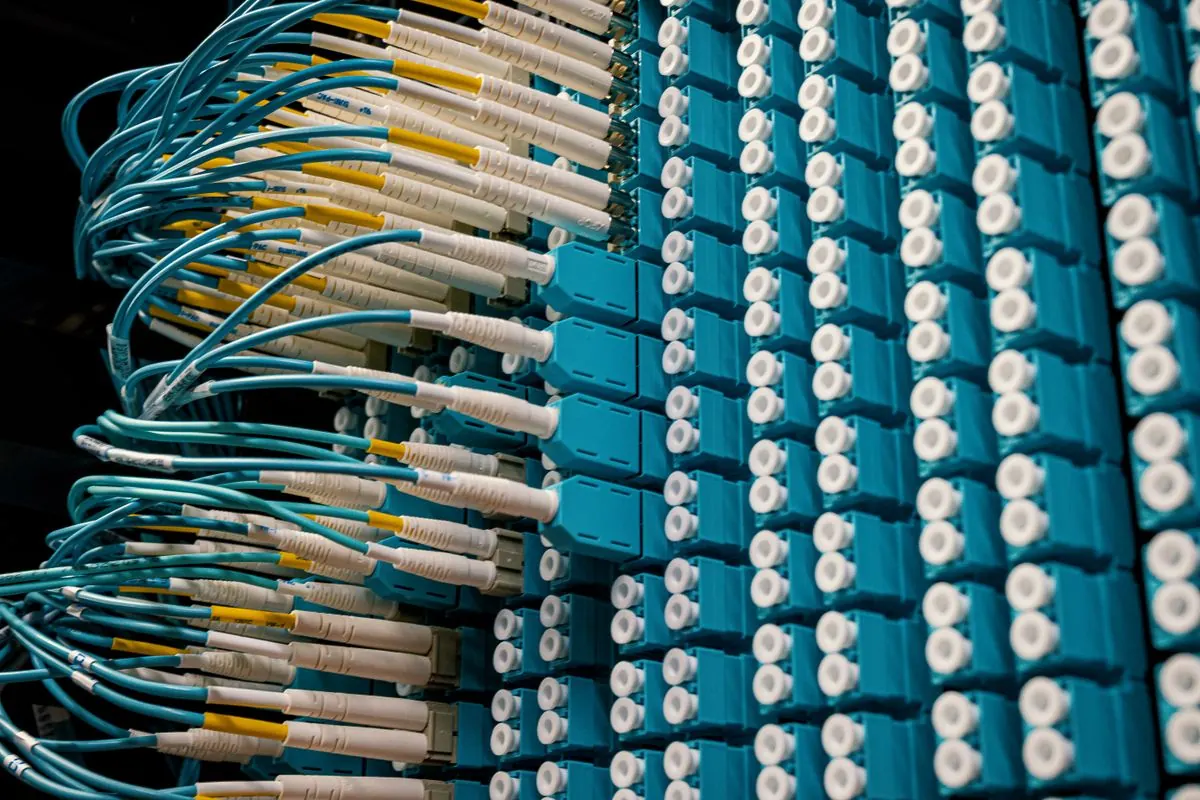
These are working notes from a recent commissioning: a 40-cabinet aggregation row in a regional facility, two top-of-rack switches per cabinet feeding a pair of end-of-row aggregation switches, the whole row landing on a redundant core. Nothing here is theory. It is the set of decisions that, repeated forty times, determine whether the next person who opens these cabinets thanks you or curses you.
Plan the row on paper before a single cable is run
We arrived with a printed cabling schedule, not a vague intent. For every cabinet: which switch lands where in the rack, which uplink port maps to which end-of-row port, the exact fiber strands and copper runs, and the label string each end would carry. The schedule was reviewed against the actual hardware before anyone touched a cable.
The reason is boring and decisive: a 40-cabinet row has hundreds of connections, and an error caught on paper costs a pencil mark, while the same error caught after the bundle is dressed costs an hour of un-dressing. We do not improvise cabling at scale. We execute a document.
Fiber first, copper second
The order matters. We ran and tested the fiber uplinks — top-of-rack to end-of-row, end-of-row to core — before pulling a single copper patch. Fiber is the spine of the row; if a trunk is bad you want to know while the pathways are still empty and accessible, not after copper is layered on top of it.
Each fiber run was tested before it carried anything. Continuity and polarity first — for duplex LC, getting transmit and receive correct is the single most common field error, and a polarity flip gives you a dark link that looks like a dozen other problems. Then an insertion-loss reading against the link’s loss budget. A run that passed continuity but sat near its loss ceiling got re-terminated then, not flagged for “later.” Later does not come.
Label both ends, label the same way, label before you dress
Every cable got a label at both ends, applied before the cable was bundled into its pathway. The label string was identical to the cabling schedule, so a label and the document are the same artifact in two places.
The format we used encodes source and destination so the cable is self-describing: rack, unit, and port at the near end, and the same triple for the far end. Someone holding one end can read where the other end lives without tracing it. That single discipline is the difference between a five-minute change and a forty-minute archaeology dig two years from now when the documentation has drifted and the original installers have moved on.
One rule we hold firm: no cable is dressed into a bundle until both labels are on and verified. A buried unlabeled cable is a future outage.
Leave slack, and leave it in the right place
We left a deliberate service loop on each fiber and copper run, coiled at a consistent location — a managed loop at the rack’s vertical manager, not a tangle at the back of the switch. Slack costs nothing at install time and buys everything later: it lets a switch slide forward on its rails for service, it absorbs a re-termination without re-pulling the whole run, and it lets a connection move one rack unit without a new cable.
The discipline is managed slack. Random extra length dumped behind the gear is worse than none, because it blocks airflow and hides cables. Coiled, secured, and consistent from cabinet to cabinet — that is slack that helps.
Respect airflow and bend radius as hard constraints
Two physical limits got treated as non-negotiable, not guidelines.
- Bend radius. Fiber has a minimum bend radius; violate it and you induce loss now and risk a crack later. Cable managers and the routing path were chosen so no strand was ever forced tighter than its rating. Copper bundles were dressed loosely — Velcro, never zip ties cinched hard, because an over-tightened tie deforms the cable and degrades the pair geometry that 10GBASE-T depends on.
- Airflow. These switches pull front-to-back. Cabling was kept out of the exhaust path, and any cabinet running PoE-heavy or 10GBASE-T-heavy loads — the warm ones — got its bundles routed clear of the intakes. A tidy row that suffocates its own gear is not tidy, it is a thermal incident waiting for a hot afternoon.
Test, document, and walk it before you call it done
With every link up, we ran the row end to end: link state and negotiated speed on every uplink, error counters watched on the switches for a sustained period to catch a marginal connection that links but drifts, and a physical walk of all forty cabinets comparing the dressed reality against the schedule. Three discrepancies surfaced on that walk — two mislabels and one fiber seated in the adjacent port. All three were trivial to fix because the row was still open and the document was still trusted.
The handover artifact was the corrected schedule plus the fiber loss readings, not a verbal “it’s all good.” A row this size will be touched dozens of times over its life by people who were not there when it was built. Everything we did over those three days was in service of making those future touches fast and safe. The cabling is finished when the next engineer can work in this row from the document alone. That is the bar.