The Sommelier Speaks: Pairing Without Rules
By
Édouard Morel
Published
Read time
5 minutes
I should confess something at the outset: I do not follow the pairing rules I was taught.
Red with meat. White with fish. Champagne to open. Port to close. These rules exist because they work — most of the time, for most combinations. But the tasting menu at Maison Verdant is not most combinations. Chef Édouard’s cooking demands that I think differently.
The Story First
Before I select a wine for a course, I ask Chef one question: what is this dish trying to say? Not the ingredients. The emotion. The intention.
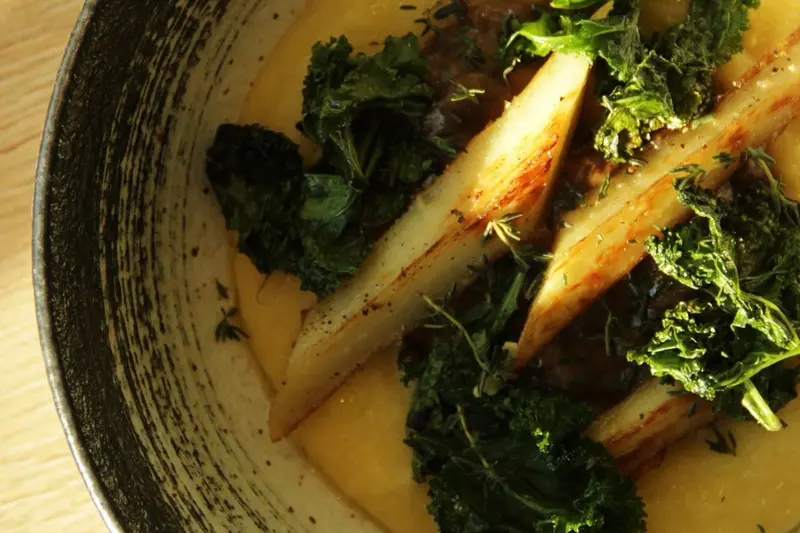
When he answers “tenderness” — as he did for the winter celery root preparation with truffle cream — I reach for something unexpected. A skin-contact white from the Jura. Not because celery root pairs with orange wine. But because tenderness in food calls for something that is also slightly imperfect, slightly unresolved, slightly human. The wine’s texture and the dish’s texture have a conversation.
The Lesson of the Off-Pairing
Two years ago, we served a cold smoked eel with warm brown butter and capers. Classic pairing instinct says Chablis — mineral, high-acid, coastal. I served it with a twelve-year-old Chenin Blanc from the Loire, fully oxidized, nutty, almost past its prime.
Three guests complained. Four guests wept.
The oxidized Chenin matched the smoke in the eel at a molecular level — both having undergone a kind of controlled deterioration that produces depth. The wine’s age echoed the preparation’s patience. It was one of my proudest choices and my most divisive.
What I Am Looking For
I am looking for wines that have something to say about how they were made, where they came from, who decided to bottle them and why. The natural wine movement gave us that vocabulary — not the wines themselves (some are extraordinary, some are flawed, most are honest), but the emphasis on story, intention, and terroir as conversation partners with food.
A meal at Maison Verdant should feel like an eight-course conversation. My job is to ensure that the wine is an active participant, not a polite accompaniment.
On Champagne
I serve Champagne in three courses. Never at the beginning as reflex. Only when the food asks for it — when something needs effervescence, when bubbles will cut through richness in a way that no other wine can.
The rest of the time, I ask myself: what would this dish talk about over dinner, if it could choose its own companion?
Then I pour that.
Édouard Morel
Chef & Co-Founder, Maison Verdant