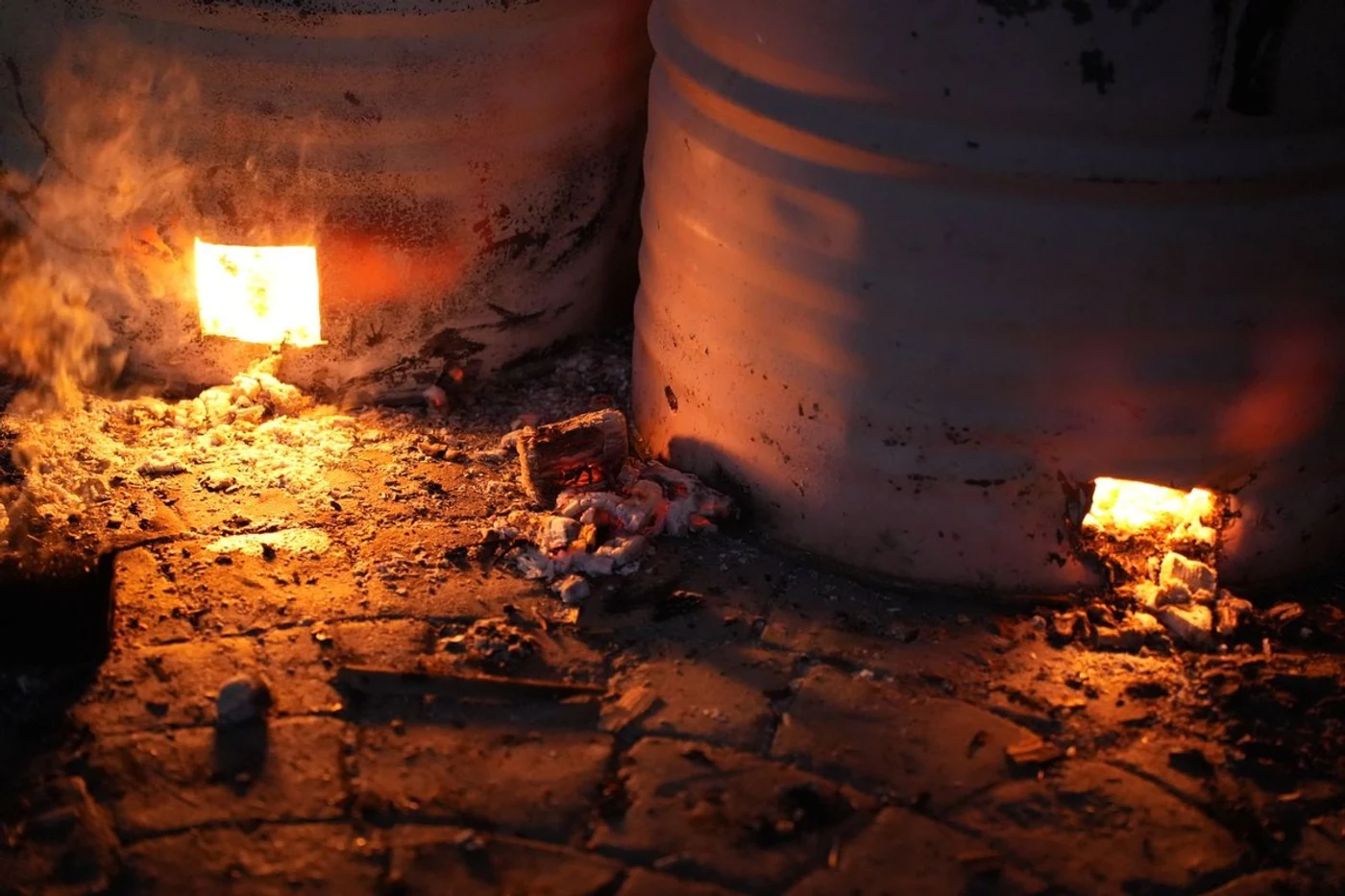
Every piece that leaves a wood kiln in Mashiko has passed through fire that cannot be precisely controlled. That is the condition of the work.
A Town Built Around Clay
Mashiko, two hours north of Tokyo, has been a pottery town since the Edo period. The clay is local — iron-rich, coarse-grained, unsuitable for delicate work but exceptional for objects meant to be used.
The kilns fire at 1280°C for forty-eight hours. Wood, not gas. The potter does not control what happens inside that fire.
What Wood Firing Does
Gas kilns are predictable. You set the temperature, the atmosphere, the duration. You get what you specified.
Wood kilns are not predictable. The ash from the fire settles on the clay during the firing. It melts. It becomes glaze. Where it lands and how it flows depends on how the wood burned, where the piece sat in the kiln, what the weather was that day.
Two pieces fired in the same kiln, sitting adjacent to each other, will not look the same.
The Acceptance Problem
Western manufacturing sees variation as error. Ceramics from Mashiko treat variation as the product. The potter’s craft is not to eliminate uncertainty but to create the conditions where uncertainty produces something worth keeping.
The vessel you receive is unique. Not as a marketing claim. As a physical fact.
Our Selection Process
We visit Mashiko twice a year. We review each firing batch by hand. We take perhaps a third of what we are shown. What we do not take goes back to the potter — either to be refired or broken down to grog.
We do not photograph what we do not select. You will not see the rejects. They were not made for you.